
New Black Wall Streets Griot
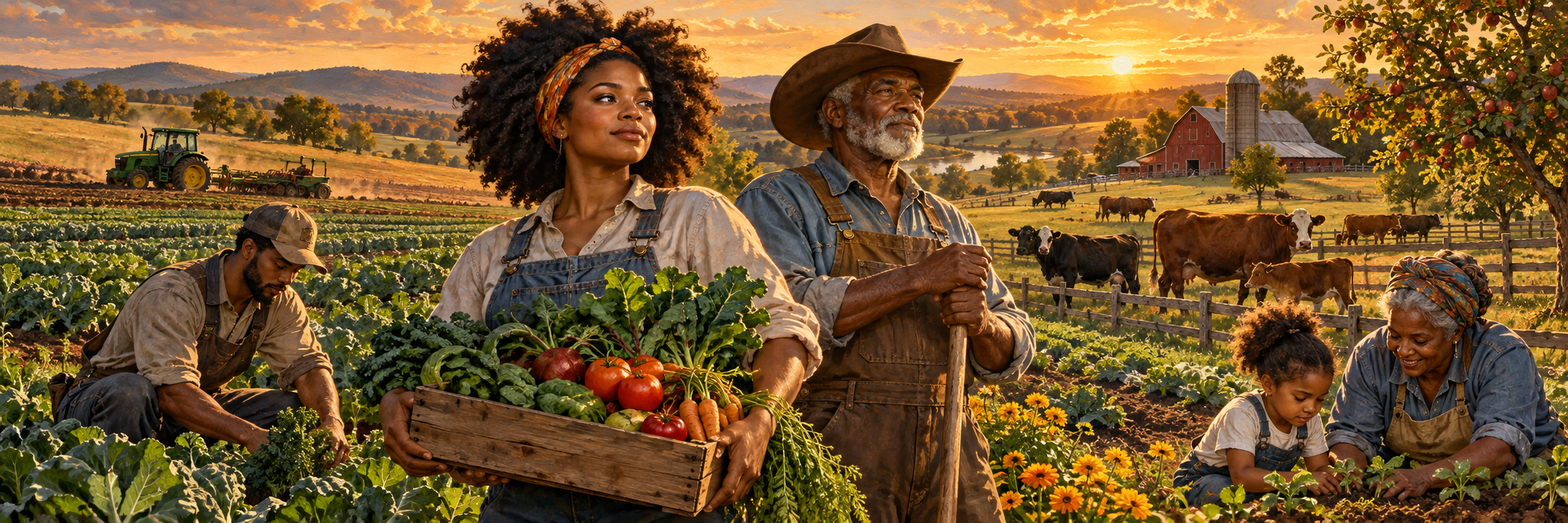
Builder Spotlights: Farming
Land. Knowledge. Food systems that sustain us.
Explore five builders from our original Spotlight collection, then carry one useful idea into your own next step.

John W. Boyd Jr.
Protect the land. Defend the farmer.

Shirley Sherrod
Build community through collective ownership

Will Allen
Grow food where the community lives

Edna Lewis
Preserve the heritage. Elevate the table.

Dr. George Washington Carver
Restore the soil. Expand the possibilities.
Where to begin: name your county, your crop or livestock activity, your scale and the decision ahead. Use the conversation worksheet and production-help resources already on this page to prepare your next step.
Original Spotlight artwork is preserved, including its historical footer. For current NBWSAA information, use our current website.
Farm Conversation and Buyer Worksheets
Open worksheets to type, download or print
Use these worksheets with the guidance on this page. Type your notes here, download a blank copy to complete later, or print. Keep unconfirmed answers marked “Ask.”
Your notes stay only in this open page. Download or print before leaving or refreshing. This tool does not send your entries to NBWSAA or save them between visits. Leave out account numbers, private identification and sensitive documents.
Black Farmers & Farming
Rooted in Our Land. Growing Our Future.
Reclaiming our land, strengthening our farms, and passing knowledge and opportunity to the next generation.
Practical resources for working and beginning Black growers, urban producers, ranchers and agricultural landowners. Choose the decision you need help making: land, production or a route to buyers.
Black growers and the work behind the table
Black growers connect land, knowledge and everyday work with the food on our tables. Explore the farming information and grower resources below. A completed feature story has not yet been published.
Protect Your Land
Own, lease or inherit farmland? Start with help that serves your state and situation.
Next step: Explore land-retention support
Have ready: Your state, county and how you hold the land.
Improve Your Farm Operation
Need help with crops, livestock or a production problem? Start with your enterprise and the decision ahead.
Next step: Find technical help through ATTRA
Have ready: Your county, crop or livestock activity, scale and main question.
Find Markets and Business Support
Looking for buyers or business guidance? Compare a sales route that fits what you produce.
Next step: Compare routes to buyers
Have ready: Your product, scale and intended customer.
The work behind the harvest
Farming connects land, knowledge, labor and the choices that keep an operation going. Black growers work in different regions and at different scales; one farm cannot stand for every grower’s experience.
This section will connect farm stories with direct agricultural resources. A useful grower profile begins with the person’s own account, the place and work involved, and permission to share names, photographs and details.
A future grower profile has not yet been published. The information here introduces the subject and connects you with existing agricultural resources.
Knowledge shared through land-grant institutions
NIFA describes the 1890 land-grant system as historically Black universities supporting agricultural research, teaching and Extension. Their work connects education with practical questions about farming and communities.
Explore NIFA’s description of the 1890 programs and follow an institution’s official Extension route to ask what help is available locally.
This is one strand of agricultural history; broader Black landownership and farming history remains a continuing subject.
Have ready: Your state, county and agricultural question.
Next step: Follow the institution’s official Extension route to check local help.
Find agricultural help for your location
The USDA Service Center locator lets you select a state and county to find agency offices. Ask the office which contact handles your question and what records, eligibility requirements or appointment steps apply.
NIFA’s land-grant university directory provides institution links and filters for state and institution type. Use those links to find the relevant Extension office and confirm its service area and current offerings.
These are external information routes. They do not establish eligibility, promise funding or constitute a verified NBWSAA grower directory.
Have ready: Your state, county, enterprise and specific question.
Next step: Use the locator or directory above; confirm service area, records and appointment steps.
Find Black growers and markets by region
Black Farmers Index organizes its grower directory by region.
Use it to find farms serving your area, then ask the producer what they grow or raise, whether they sell to households or other farms, and how ordering and pickup work.
A directory entry is a lead; it does not confirm today’s stock or every ownership claim.
For food shopping, the Black Farmers’ Market in Durham and Raleigh, North Carolina publishes a seasonal market calendar and member information.
In California, Prosperity Market describes a mobile Los Angeles market featuring Black farmers, food producers and chefs.
Check each operator’s current schedule and vendors.
These are regional examples, not a complete national list.
Have ready: Your location, product and preferred ordering or pickup plan.
Next step: Choose a regional lead above, then confirm current vendors, stock and schedule.
Buying cattle: sale barns, auctions and private sales
Buying live cattle calls for a different search from buying food at a farmers market.
Start with the class of livestock and the purpose of the purchase: feeder calves, breeding bulls, replacement heifers or cows.
Ask a local sale barn about its cattle sale days and categories; ask a ranch offering a private sale for its current stock and sale terms.
USDA’s Feeder and Replacement Cattle Auctions reports identify reported auction locations by state and provide market information.
Reports describe completed sales, not inventory reserved for you.
For a commercial national route, Superior Livestock Auction’s buying guide explains its cattle marketing channels; its selling guide explains the producer side.
These general livestock resources are not presented as Black-owned businesses or NBWSAA partners.
Ask about head count, class, weight range, sex, age, breed and the seller’s records.
Clarify whether pricing is per head or per hundredweight, and obtain the full fees, payment and delivery terms.
Ask what inspection, health records, identification and transport arrangements apply to the particular sale; confirm animal-health questions with a veterinarian.
Confirm the pickup or delivery window, hauling distance and who is responsible for each step before committing.
Have ready: Livestock class, purpose, head count, budget and hauling plan.
Next step: Review the reports or guides above, then confirm the particular sale’s records and full terms.
Tractors, implements and getting the work done
- Ask whether purchase, rental, shared equipment or a custom operator fits the operation.
- When comparing machines, ask about PTO power, implement compatibility, service history, repair support and total operating cost.
An equipment discussion should begin with the job, acreage, soil conditions, available labor and time window for fieldwork.
A crop grower may need planting and harvesting capacity; a hay producer may be comparing mowing, raking and baling equipment.
Iowa State Extension’s Farm Machinery Selection guide covers machinery performance, ownership and operating costs, and matching tractor power to implement size.
It is a technical planning guide, updated in 2017, not a current equipment price list.
Have ready: The job, acreage, soil, labor and fieldwork window.
Next step: Use the machinery guide above to compare purchase, rental, sharing or a custom operator.
What different producers need
The useful question is “What enterprise are you running?” A cow-calf producer, a stocker operator and a vegetable grower will need different information. University of Missouri Beef Extension groups resources around nutrition, reproduction, herd health, forage, environmental management and business management.
Use that subject language when asking for an appropriate specialist.
Cattle and other grazing livestock: pasture and forage supply, hay quality, feed costs, water, fencing, handling facilities, breeding and herd records.
Row crops and hay: soil tests, seed, planting and harvest timing, machinery capacity, storage and a buyer for the crop.
Fruit and vegetable operations: irrigation, pest management, harvest labor, wash-and-pack capacity, cooling, delivery and wholesale or direct-market buyers.
Poultry, dairy, sheep and goats, beekeeping and aquaculture: seek an enterprise-specific Extension specialist and confirm the appropriate production, processing and marketing route.
Bring your county, acreage or herd size, production stage and specific decision to the conversation. Ask which services are actually offered, which records are needed and what costs or deadlines apply. Resource descriptions checked October 4, 2026.
Have ready: Your county, enterprise, acreage or herd size, production stage and decision.
Next step: Use the subjects above to identify a suitable Extension specialist; confirm services, records, costs and deadlines.
Protect the land behind your operation
Land tenure means how you hold land: ownership, a lease or another arrangement. If family land or inheritance is part of your question, start with a provider that handles land retention in your state.
The Federation of Southern Cooperatives/Land Assistance Fund describes Southern-region will clinics for Black farmers and landowners, with preregistration and attorney referral routes.
Ask about your state, the next available clinic, membership requirements and any legal-service costs.
Its page describes complimentary clinics but states that the Federation does not offer free legal services; do not assume a free attorney or an available appointment.
Have ready: Your state, county and how you hold the land.
Next step: Review the Federation route above; confirm state coverage, clinic availability, membership and legal-service costs.
Get help with the production problem
NCAT’s ATTRA program offers agricultural resources and an Ask an Ag Expert route for farmers, ranchers, land managers and educators. Its topics include crops, livestock, soil and water, equipment, marketing and business and risk management.
For a useful first conversation, name the enterprise—the crop or livestock activity you run—and the bottleneck.
For example: “I raise cattle in this county and need help planning forage,” or “I grow vegetables and need to compare irrigation options.” Ask which specialist and resources fit your scale and location.
Have ready: Your county, crop or livestock activity, scale and main bottleneck.
Next step: Use ATTRA’s Ask an Ag Expert route above to find an appropriate resource or specialist.
Plan the business as well as the production
ATTRA’s business and risk management resources provide a starting point for farm-business learning. Keep questions about the cost of a production cycle, labor, records and the timing of receipts separate from a request for a grant.
Prepare a description of your enterprise, current sales route and immediate decision. Ask for an appropriate planning resource or specialist. Any loan, insurance or investment decision needs its actual terms and eligibility checked separately.
Have ready: Your enterprise, sales route, production-cycle costs, labor and record questions.
Next step: Start with ATTRA’s planning resources above; check actual loan, insurance or investment terms separately.
Choose a route to your buyer
A market channel is how your product reaches a buyer. ATTRA’s marketing resources separate direct marketing, farmers markets, wholesale marketing, sales to schools and institutions, certifications and value-added products.
Pick the route you want to explore before asking for help.
For ranchers considering food sales, Direct Meat Sales: Getting Started is a producer resource to review.
Selling live cattle and selling packaged meat require different planning.
Ask the relevant specialist or processor about the intended product, processing route, buyer requirements, delivery and applicable rules before committing to a sales model.
Have ready: Your product, volume, intended customer and sales route.
Next step: Choose a marketing resource above; for meat sales, confirm processing, delivery and applicable rules.
Prepare for Your Next Buyer
- Before promising volume or delivery, ask the buyer what product, quantity, packaging, delivery schedule, storage conditions and documentation they need. Clarify pricing, payment timing and rejected-product terms. Requirements depend on the product and sales route.
Have ready: Your product, realistic volume, packaging and delivery capacity.
Next step: Ask your intended buyer about requirements, price, payment timing and rejected-product terms.
Fresh-Produce Audits
USDA’s Good Agricultural Practices (GAP) audits are voluntary audits for fruits and vegetables.
They address production, packing, handling and storage practices intended to reduce microbial food-safety risks.
Ask your buyer which audit they require before choosing one, and check USDA’s current service fees.
Understand USDA produce-audit options
This produce guidance does not apply to live-cattle sales, meat processing, dairy or processed-food requirements. Those need commodity-specific sources and provider confirmation.
Have ready: Your fruit or vegetable product, buyer’s audit requirement and production or packing practices.
Next step: Check USDA’s audit options and current fees above before choosing a produce audit.
Match the resource to its purpose
USDA’s small-scale producer resources collect conservation, crop-insurance and heirs’ property information and local contact routes.
Use the page to identify the subject of your question, then confirm the program, commodity, county and requirements with the appropriate office or agent.
SARE grants support competitive research and education projects.
They are not general farm-startup grants and generally cannot fund large land, equipment or capital purchases.
Select your SARE region to check current grant types, eligibility and deadlines for a specific project.
Have ready: Your county, commodity and program question; for SARE, your region and research or education project.
Next step: Use the relevant route above to confirm requirements, eligibility and deadlines.
Prepare your next conversation
Write a short operation summary for yourself before contacting a resource provider:
- State and county; beginning, established or urban operation.
- Crop or livestock enterprise and acreage or herd size.
- How the land is held: owned, leased or a family/inheritance question.
- Current or intended buyer and sales route.
- The immediate bottleneck: land, production, equipment, business planning or market access.
- The decision you need help making and which provider is relevant.
Then ask what the provider actually offers, whom it serves, costs, appointment steps and which records are needed. This worksheet is for your own preparation; it does not submit an inquiry to NBWSAA.
Resource descriptions checked October 4, 2026. Check each organization’s current services, availability and terms directly.